


Hidden Objects Game: Find & Go
4.9113.00 Reviews
App Specs
- Version
- 1.6.0
- Updated On
- License
- Free
- Downloads
- 50,000+
- Developer
- Guru Puzzle Game
- Categories
- Puzzle
- Platform
- Android
Screenshots



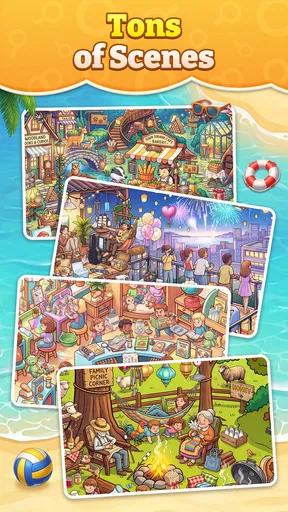
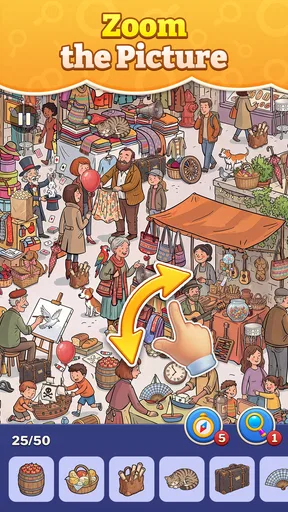
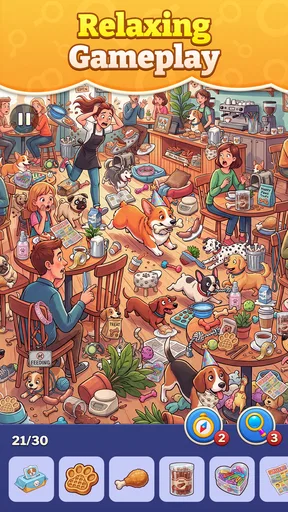


 Analysis by AppCompare
I usually turn to a hidden-object puzzle when I want something absorbing without the pressure of a timer, a complicated rulebook, or a long commitment. Hidden Objects Game: Find & Go fits that mood well. It is a free puzzle game from Guru Puzzle Game built around searching illustrated scenes for items that are easy to overlook. I found the basic idea immediately understandable, but the appeal comes from how the search changes my attention: instead of reacting quickly, I slow down, scan the image, and learn to notice small differences.
That makes it a useful choice for short breaks, quiet evenings, or anyone who enjoys visual puzzles more than traditional logic grids. It is also rated for Everyone, so its presentation is approachable for a broad audience. Still, this is not the right pick for every puzzle fan. Players who need deep strategy, competitive scoring, or a constant stream of new mechanics may prefer another kind of game. My recommendation depends mainly on what you want from a puzzle session: calm observation, or more demanding problem-solving.
How I Decided Whether It Was Worth Playing
My first test was simple: could I understand what to do without studying instructions? Here, the answer is yes. The central loop is to inspect a scene, identify the requested objects, and move on after completing the search. That clarity matters because hidden-object games work best when the player can begin looking almost immediately rather than spending the opening minutes learning controls.
The second criterion was whether the search felt relaxing rather than merely slow. A scene can be attractive and still become frustrating if objects blend into the background too aggressively. I paid attention to how often I felt challenged in a satisfying way versus how often I was simply tapping around and hoping to get lucky. For me, the strongest moments came when I adjusted my viewing pattern and found an item I had passed several times.
I also considered how well the game works in ordinary situations. I tested it mentally as a waiting-room game, a wind-down activity before sleep, and something to play while taking a short break from work. A hidden-object title needs to support interrupted play because its natural audience is often looking for a low-pressure activity rather than a full gaming session.
Finally, I looked at the practical side. The game is free to install, but it includes in-app purchases ranging from $1.99 to $96.99 per item. That wide range makes it important to approach the game with a clear spending limit, especially if you are handing the device to a child. The free entry is attractive, but “free” does not mean every part of the experience is necessarily cost-free.
The Basic Search Loop Is Easy to Pick Up
What I like most about the design is that it does not ask me to memorize a complicated system. I can open a scene, take in the overall composition, and begin with the most obvious objects before moving toward less noticeable areas. That makes the game friendly to people who do not normally describe themselves as gamers.
Worth Reading Before You Choose

Flipboard Shows What News Apps Must Do Beyond the Feed

Switching to Android Auto Means Rethinking Your Driving Routine

Google Calendar Makes a Crowded Week Easier to Manage

Ludo King Makes the Most of the Minutes Between Plans

Baby Panda World Brings Quick Play to Modern Phones, but Its Game Library Feels Busy

ESPN’s Live Game View Makes Following Close Games Easier
There is also a useful mental rhythm to the search. I tend to divide a scene into sections instead of scanning randomly: upper corners, central subjects, edges, foreground details, and background decoration. This approach is more effective than tapping everywhere, and it turns the game into a small exercise in visual organization. The game does not need to explain that method for it to become useful through play.
One practical tip is to avoid locking onto the first interpretation of an object. A requested item may be represented by a shape, color, or angle that is less obvious than the word suggests. When I get stuck, I stop searching for a literal version and instead ask what visual clue could count: a partial outline, an object behind another object, or a detail that blends into the scenery. That change in mindset is often more helpful than simply searching faster.
Why the Relaxed Pace Is the Main Strength
Hidden Objects Game: Find & Go works best when I treat it as focused downtime rather than a test of speed. The satisfaction is in narrowing the possibilities and recognizing a detail, not in building a complex strategy several moves ahead. That makes it especially suitable after a tiring day, when I want to use my attention but do not want to manage a demanding competitive game.
A realistic use case is a ten-minute break between errands. I can begin a scene, search methodically, and stop when I need to leave without having to remember a complicated story or restart a difficult sequence. The same quality helps during travel or while waiting for an appointment. It fills small gaps without requiring a large emotional investment.
For families, the Everyone age rating makes the game easier to consider as a shared visual activity. An adult and child can look at the same scene and discuss where an object might be hiding. I would still supervise purchases, because the presence of optional in-app spending changes how comfortable I would be letting a child use the game alone.
Three Search Habits That Make a Noticeable Difference
My first useful habit is to scan by depth. I start with objects that appear closest, then inspect the middle layer, and finally examine the background. This prevents me from repeatedly checking the same obvious region and helps when an item is partially concealed by a larger piece of scenery.
The second is to use shape before color. Color can mislead me when several parts of a scene share the same tone, while the outline of an object often remains recognizable. I look for curves, straight edges, handles, pointed ends, or repeated patterns. This is particularly helpful when the object is visually camouflaged.
The third is to change scale mentally rather than relying on frantic tapping. I first look at the complete scene, then focus on small clusters such as a shelf, table, garden patch, or wall decoration. Searching at two levels helps me avoid the common mistake of staring at one tiny area for too long. If I have spent several moments on one cluster without progress, I move elsewhere and return later with fresh eyes.
These habits are not separate modes or advanced settings; they are ways I learned to approach the scenes more intelligently. That distinction matters. The game’s depth comes mainly from observation and patience, so players who enjoy improving their own search technique will get more from it than players who only want to tap through quickly.
Where It Beats More Traditional Puzzle Alternatives
Compared with crossword-style games, this is more visual and less dependent on vocabulary. Someone may enjoy puzzles but dislike word clues, spelling, or clues that require cultural knowledge. Here, the challenge is based on locating details in an image, which makes the activity feel more immediate.
Compared with number or logic puzzles, it also has a softer learning curve. Sudoku-style games ask me to maintain several constraints at once, while this game asks me to inspect and recognize. That makes it a better choice when I want concentration without the mental bookkeeping of a formal logic problem.
Compared with match-three games, the experience is less reflexive. I am not looking for rapid combinations or reacting to a changing board. The trade-off is that it may feel less exciting. If your ideal break involves movement, sound, rewards, and quick decisions, a hidden-object game may seem too quiet.
The game’s strongest advantage is therefore not complexity. It is accessibility. I can recommend it to someone who wants a puzzle that explains itself through the image and allows attention to be the main skill. That is a meaningful difference from alternatives that demand faster reactions, stronger language skills, or a willingness to learn several systems.
Where Another Category May Suit You Better
I would not choose this as my main puzzle game if I wanted a strong sense of progression through increasingly intricate rules. Hidden-object searches can become familiar once I understand the visual rhythm. The pleasure comes from finding details, but the underlying action remains consistent. Players who need new mechanics to keep their interest may eventually want a logic, word, adventure, or strategy game alongside it.
It may also be a poor fit for anyone who dislikes visual clutter. The same density that makes an object satisfying to discover can make a scene tiring for people with eye strain or difficulty distinguishing small details. A cleaner puzzle board, larger symbols, or a text-based format could be more comfortable in that situation.
Players who enjoy competition should also set expectations carefully. This is primarily an individual observation activity, not the kind of puzzle I would choose for leaderboards, versus matches, or elaborate tactical planning. If your motivation comes from beating a friend or optimizing every move, another category will probably provide a stronger reason to return.
There is a further trade-off between convenience and spending. The game costs nothing to start, which lowers the barrier to trying it, but the in-app purchase range means I would check the purchase controls before sharing the device. Someone who strongly prefers a single upfront payment may feel more comfortable with a paid puzzle that removes the need to think about optional purchases.
What the Version and Store Details Mean in Practice
The game is currently listed as version 1.6.0 and supports Android 7.0 or later. That makes compatibility straightforward for many Android users, although I would still check the operating system on an older phone or tablet before installing. On a newer device, the more important question is personal comfort with looking at detailed scenes for extended periods.
Its average rating is 4.9 from around 1.9 thousand ratings, with more than a hundred written reviews, and the game has passed 50 thousand installs. Those figures suggest that the concept has found an audience, but they should not replace personal judgment. A high rating can tell me that many players enjoy the general experience; it cannot guarantee that the visual style or purchase model will suit my preferences.
I also appreciate that the developer is clearly identified as Guru Puzzle Game. That gives the title a recognizable source rather than making it feel like an untraceable one-off download. Still, I judge the game by the actual play loop: if I want calm searching, it makes sense; if I want a broader puzzle system, the developer name alone would not change my decision.
The Real Cost of Changing From Another Puzzle Game
Switching to this game is easy if you are coming from another casual puzzle title because the basic commitment is low. You do not need to learn a complicated control scheme, and the visual objective is apparent from the start. The larger adjustment is psychological: players used to constant rewards or rapid rounds need to accept that the fun comes from careful looking.
There is also a small habit change in how I use hints or searches. In a logic game, I may write possibilities down or plan several turns ahead. Here, I get better results by changing my viewing method. Before considering any optional assistance, I recommend a full sweep using the depth, shape, and section techniques above. That preserves the satisfaction of discovery and reduces the chance of spending simply because I became impatient.
If I were moving from a word puzzle, I would expect less dependence on language but more dependence on visual attention. If I were moving from a match-three game, I would expect fewer quick bursts and more deliberate pauses. Knowing that difference prevents disappointment. The game is not trying to replace every type of puzzle; it occupies a calmer, more observational corner of the category.
Who I Would Recommend It To
I would recommend Hidden Objects Game: Find & Go to casual players who want a clear visual challenge, parents looking for an approachable activity to explore with a child, and adults who enjoy short periods of focused searching. It is especially suitable for people who find traditional puzzles intimidating but still want something more engaging than passive scrolling.
I would also suggest it to anyone who likes improving through observation. The most rewarding progress is not learning a new rule but becoming better at reading a crowded scene. Once I started scanning systematically, I felt less dependent on random tapping and more in control of the search.
I would skip it if I needed a deep narrative, competitive pressure, advanced strategy, or a completely purchase-free experience. I would also look elsewhere if small visual details quickly cause fatigue. In those cases, a word, number, or larger-format logic game may be a better everyday companion.
My Final Recommendation
After playing it as a decision rather than assuming every puzzle game serves the same purpose, I see Hidden Objects Game: Find & Go as a focused relaxation title. Its free starting point, Everyone rating, simple visual premise, and broad Android compatibility make it easy to try. The best sessions are unhurried, with the player treating each scene like a small investigation instead of racing through a checklist.
The limitations are equally clear. The core activity may feel repetitive to players who need changing mechanics, and the optional purchases deserve attention from families or anyone who prefers a fixed-cost game. The detailed scenes can also be demanding for tired eyes. Those are not reasons to dismiss it; they are reasons to choose it for the right situation.
My advice is to try it when you want calm concentration, not high-intensity gaming. Start with a systematic scan, resist random tapping, and decide in advance whether you are comfortable with in-app purchases. If that style of play sounds appealing, this puzzle game is a friendly and accessible way to turn a short break into a satisfying search.
Pros
- Relaxing gameplay suitable for short
- casual sessions.
- Large variety of hidden-object scenes to explore.
- Helpful hints make difficult searches less frustrating.
- Simple controls are easy for players of all ages.
- Offline play is convenient when no internet is available.
Cons
- Some scenes can feel repetitive after extended play.
- Hints or extra features may be limited without in-app purchases.
- Small objects may be difficult to spot on smaller screens.
- Ads can interrupt the flow between levels.
- Progression may feel slow for players seeking more challenge.
FAQs for Hidden Objects Game: Find & Go
What is Hidden Objects Game: Find & Go?
Hidden Objects Game: Find & Go is a casual puzzle game focused on searching illustrated scenes for objects that are cleverly concealed within the artwork. Each level asks you to locate a list of items, making the game suitable for short sessions or longer play periods. The experience combines observation, concentration, and relaxed exploration rather than fast reflexes or complicated controls.
How do you play Hidden Objects Game: Find & Go?
Gameplay is straightforward: open a scene, review the objects you need to find, and tap each item when you spot it. The challenge comes from noticing small details, recognizing objects from different angles, and avoiding random taps. Depending on the level or game mode, you may also have limited time, hints, or other assistance, so careful searching is usually more effective than rushing.
Is Hidden Objects Game: Find & Go free to download and play?
The game can generally be downloaded without an upfront purchase, but availability of advertisements, optional in-app purchases, hints, extra lives, or other paid features may depend on the version and platform. Before installing, it is worth checking the official store listing for current pricing information. Players who prefer uninterrupted sessions should also review whether ads can be removed through an optional purchase.
Can children play Hidden Objects Game: Find & Go?
Hidden Objects Game: Find & Go is generally easy to understand and may be appropriate for children who enjoy visual puzzles, but parents should still check the age rating, advertising content, and in-app purchase settings before allowing independent play. Some scenes may be more difficult than expected, while timed challenges or frequent ads could affect younger players. Parental controls are recommended when purchases are available.
Does Hidden Objects Game: Find & Go require an internet connection?
Some parts of Hidden Objects Game: Find & Go may work offline after the necessary game content has been installed, which is convenient for travel or areas with unreliable connectivity. However, an internet connection may still be needed for advertisements, cloud features, updates, special events, or restoring purchases. Because requirements can change between versions, test the game in airplane mode after installation if offline access is important to you.


